Kakebo Shop — a live collectibles storefront
Kakebo is a live Shopify store selling anime, tokusatsu, and Japanese collectibles — a growing Shopify catalog organized into franchise-based collections, with weekly figure drops, a mystery-box program, and a drop-list email funnel. The work spans theme code, catalog architecture, SEO, and merchandising strategy.
A growing catalog organized so customers and Google both find it. Smart-collection rules (tag + title logic) file new inventory automatically, so the catalog scales without manual sorting.
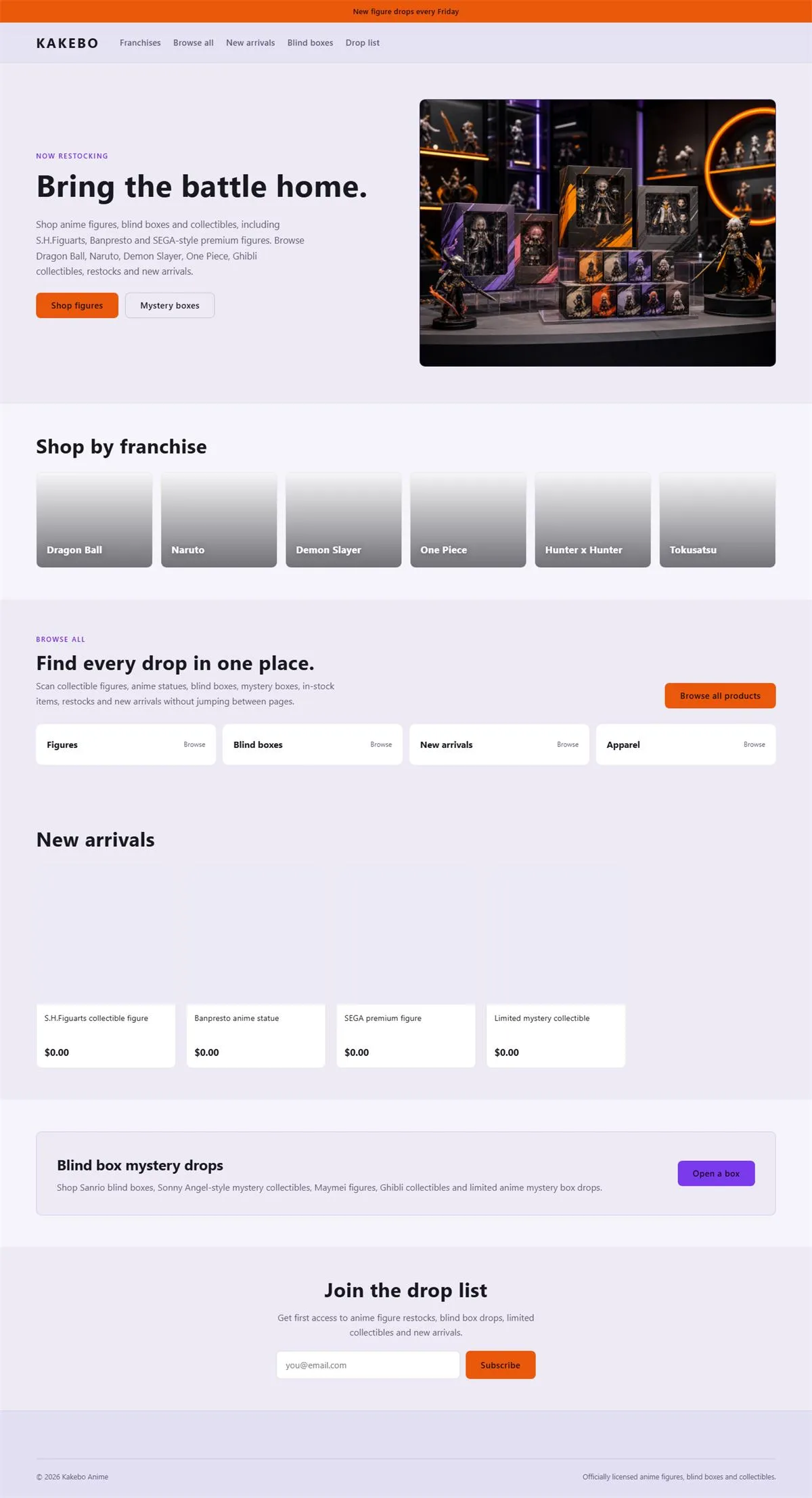
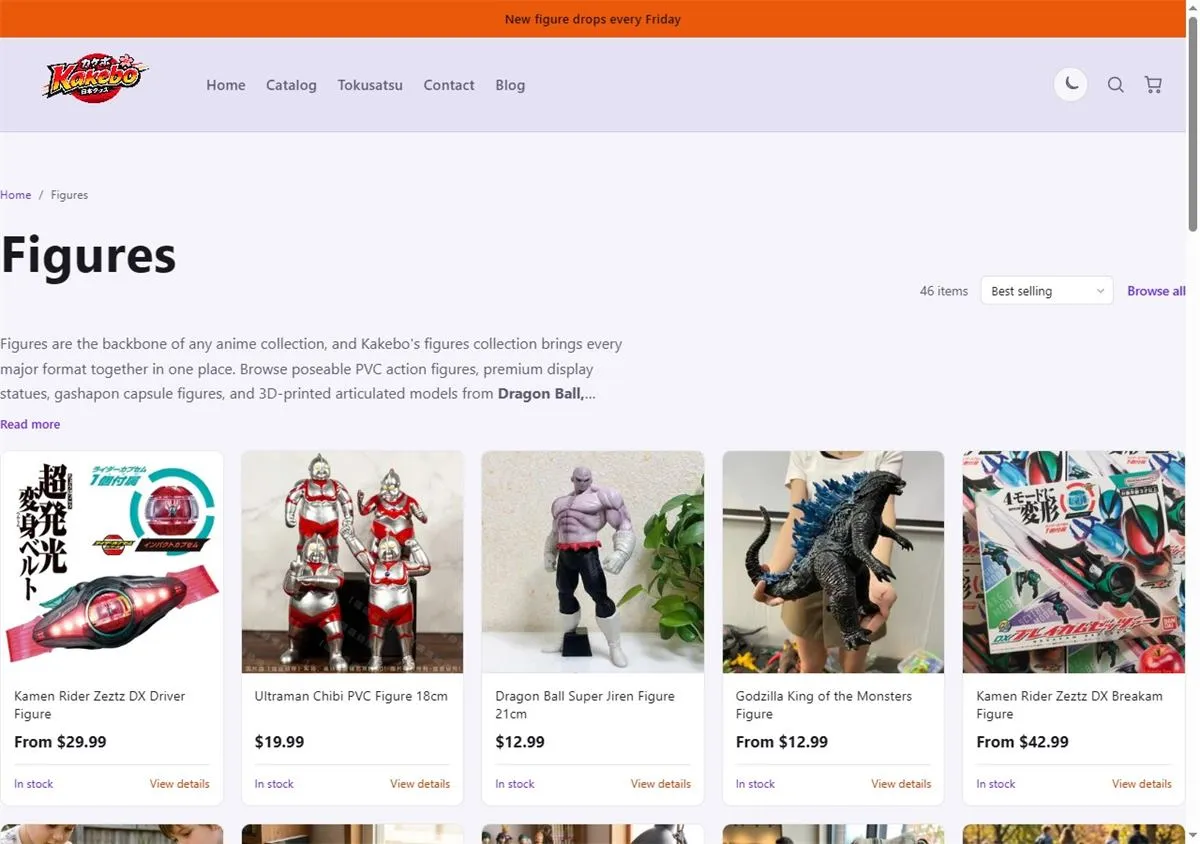
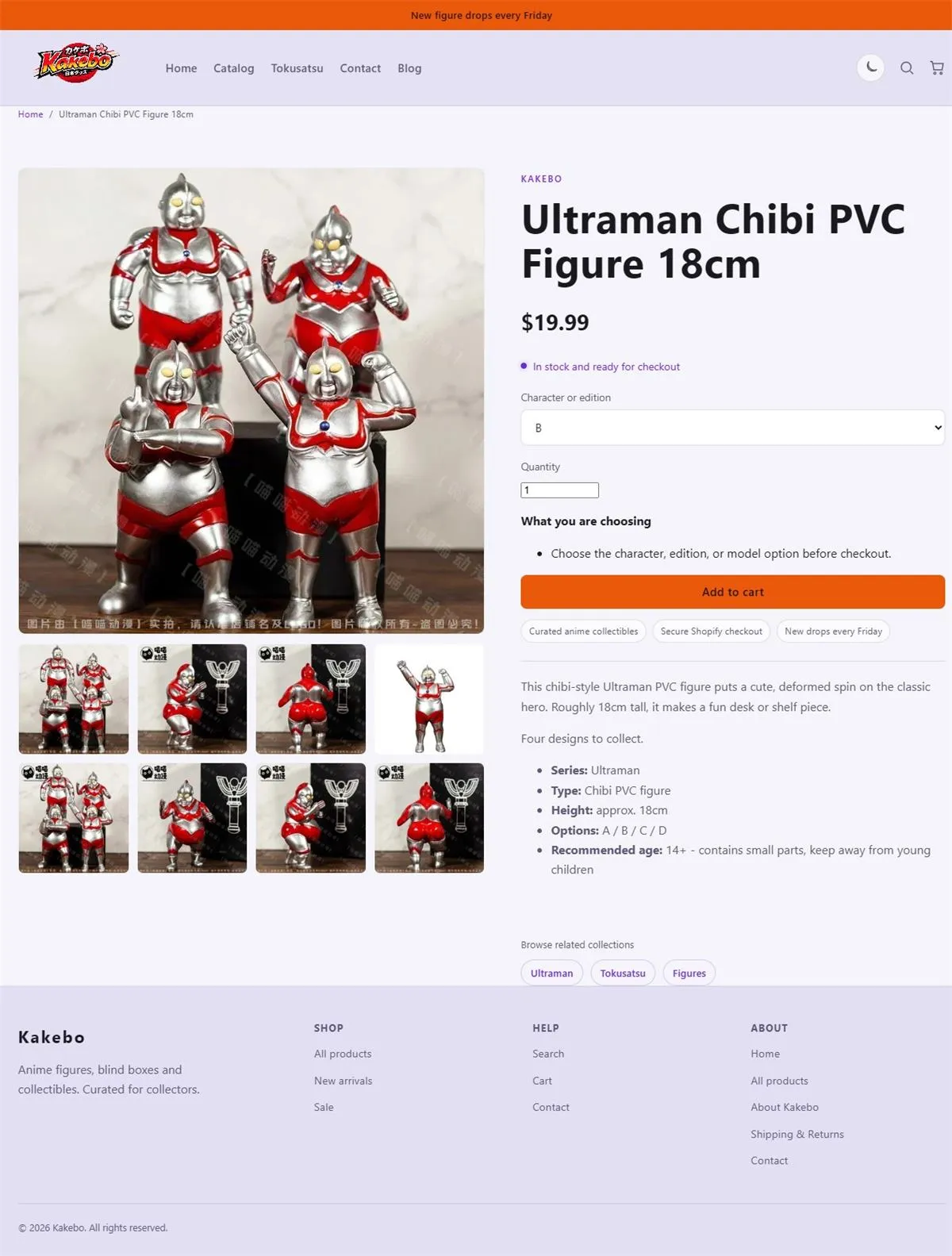
Collectors shop by franchise, not by product type — so navigation leads with Dragon Ball, Naruto, One Piece, Kamen Rider, Super Sentai, Ultraman, and Godzilla & Kaiju. Smart collections combine tag and title rules so new inventory files itself; no manual sorting as the catalog grows.
- Meta titles and descriptions for franchise-based collections
- Product clarity pass: what's included, brand, dimensions, packaging, returns
- Normalized productType and vendor fields
- Published blog content for long-tail search
- "New figure drops every Friday" cadence banner
- Mystery-box program for discovery shoppers
- Sale badges on cards and product pages for tagged items
- WELCOME10 first-order discount + drop-list email capture
- Option guidance on multi-variant figures to cut support email
- Shopify Liquid theme: layout, sections, snippets, locales
- Admin GraphQL automation for bulk product/SEO operations
- Smart collection rule design (tag OR title-contains logic)
- ShopifyQL analytics queries for merchandising decisions
- Tag-driven New Arrivals once featured stock is curated
- Email automation flows beyond the welcome series
- Franchise landing content for non-brand search
Ecommerce as a system: catalog architecture that scales without manual upkeep, Shopify automation through the Admin API instead of clicking, and SEO + merchandising decisions grounded in how the store's customers actually shop.